Radar pulses enable imaging through clouds and darkness
ICEYE
ICEYE explains that SAR sends pulses toward the ground and processes their echoes into images, allowing operation through clouds and without daylight.
Based on: ICEYE

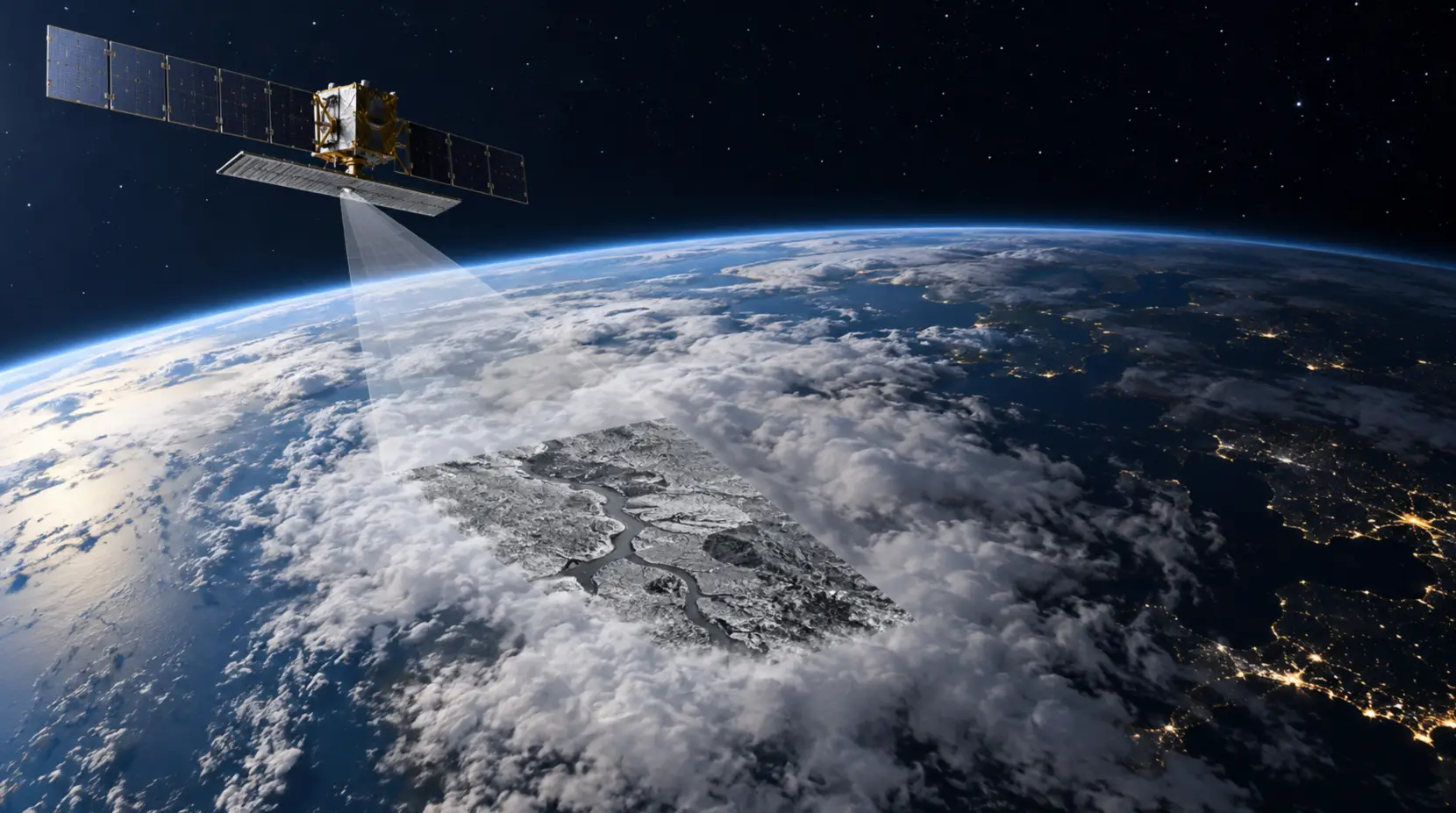
Yes. Synthetic aperture radar, or SAR, can form images of Earth's surface through clouds and at night. It sends radar pulses and processes their returning echoes rather than relying on sunlight.
SAR operator ICEYE explains this imaging method and its advantage over optical cameras. The technology returned to the news when Synspective launched its twelfth StriX satellite on September 19, 2026, at 03:22 UTC.
A radar image represents measured echoes, not a conventional visible-light photograph. The technology's established capability also does not mean a newly launched satellite is immediately ready for service: Synspective said testing and commissioning would follow over the coming months.
Radar imaging can work through clouds and darkness. A successful launch is separate from completing a satellite's operational checks.
ICEYE
ICEYE explains that SAR sends pulses toward the ground and processes their echoes into images, allowing operation through clouds and without daylight.
Based on: ICEYE
Synspective
Synspective reported launching its twelfth SAR satellite on September 19, 2026, and said testing and commissioning would precede its entry into service.
Based on: Synspective
Was this check helpful?
Sign in required
Sign in required

No. Several stainless steel families are strongly attracted to magnets. Other grades respond weakly, and manufacturing can change their magnetic behaviour.

Yes. Solar panels can use diffuse daylight when clouds block direct sunshine. Their output generally falls as less sunlight reaches the cells.

No. Watts measure power consumption, while lumens describe light output. A more efficient bulb can produce the same amount of light using fewer watts.