NASA identifies Venus as the hottest planet
NASA
NASA explicitly states that Mercury is not the hottest planet despite being nearest the Sun; Venus holds that distinction because of its dense atmosphere.
Based on: NASA

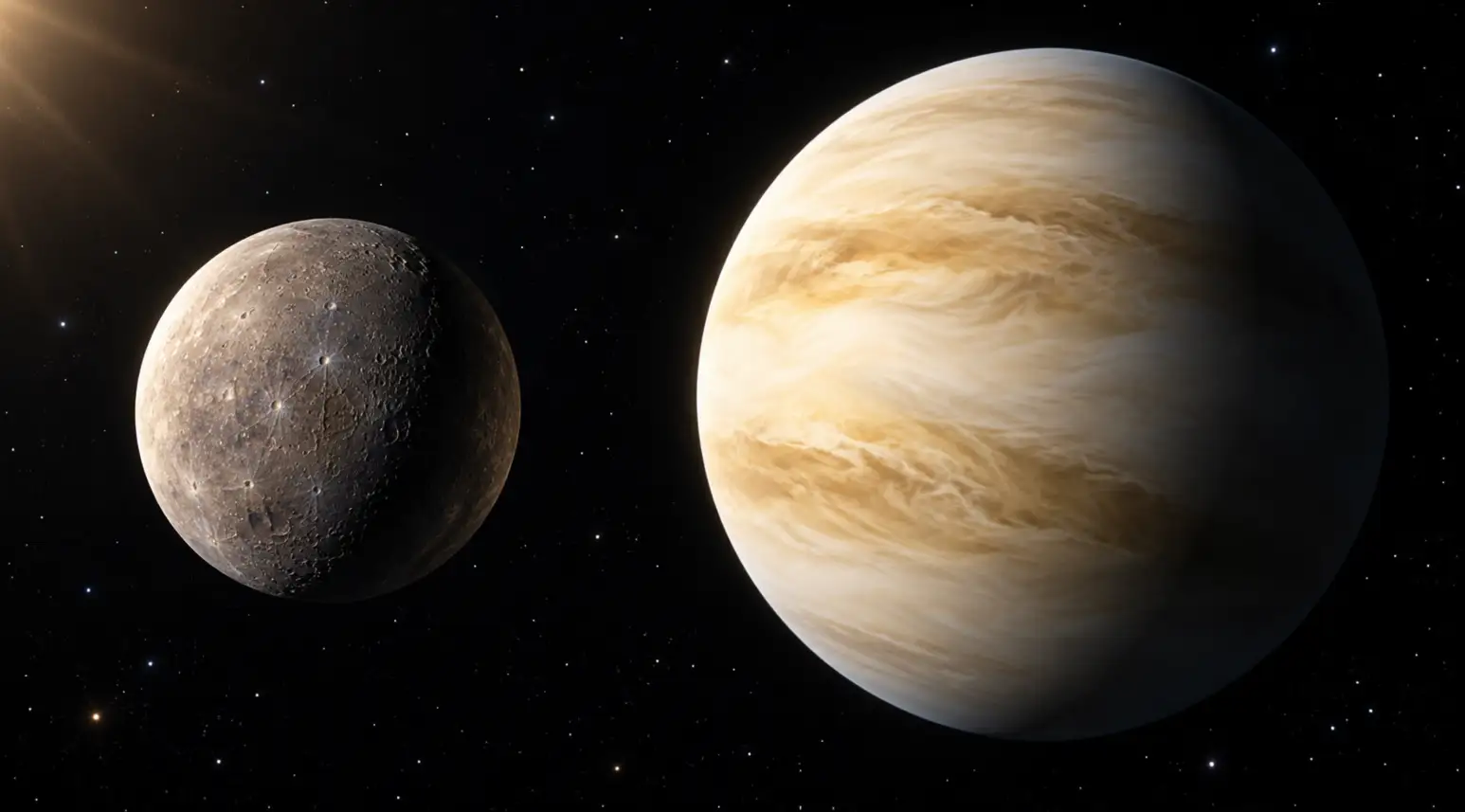
No. Venus, not Mercury, is the hottest planet in our solar system. Being closest to the Sun does not automatically give a planet the highest surface temperature.
NASA reports that Mercury's daytime surface temperatures can reach about 430°C, while its nights can fall to about -180°C. ESA describes Venus's surface temperature as approximately 465°C, sustained by its dense atmosphere and powerful greenhouse effect.
The distinction is heat retention. Mercury has only a thin exosphere rather than a substantial atmosphere, while Venus's atmosphere traps heat. These figures describe surface conditions, not temperatures deep inside planets.
Distance from the Sun is only part of the explanation. Venus's atmosphere makes its surface hotter than Mercury's.
NASA
NASA explicitly states that Mercury is not the hottest planet despite being nearest the Sun; Venus holds that distinction because of its dense atmosphere.
Based on: NASA
European Space Agency
ESA describes Venus's surface as approximately 465°C and explains that atmospheric heat trapping produces its exceptionally high temperature.
Based on: European Space Agency
NASA
Mercury's surface can reach about 430°C during the day and fall to about -180°C at night. Its thin exosphere does not retain heat like a substantial atmosphere.
Based on: NASA
Was this check helpful?
Sign in required
Sign in required

Yes. Two hearts pump blood through the gills, while a third circulates it through the rest of the body.

Yes. Bamboos belong to the grass family, Poaceae. Some grow tall and develop woody stems, but their tree-like appearance does not change that classification.

No. Water's boiling temperature depends on pressure. In an open container at higher elevations, lower air pressure allows it to boil below 100°C.