Explanation
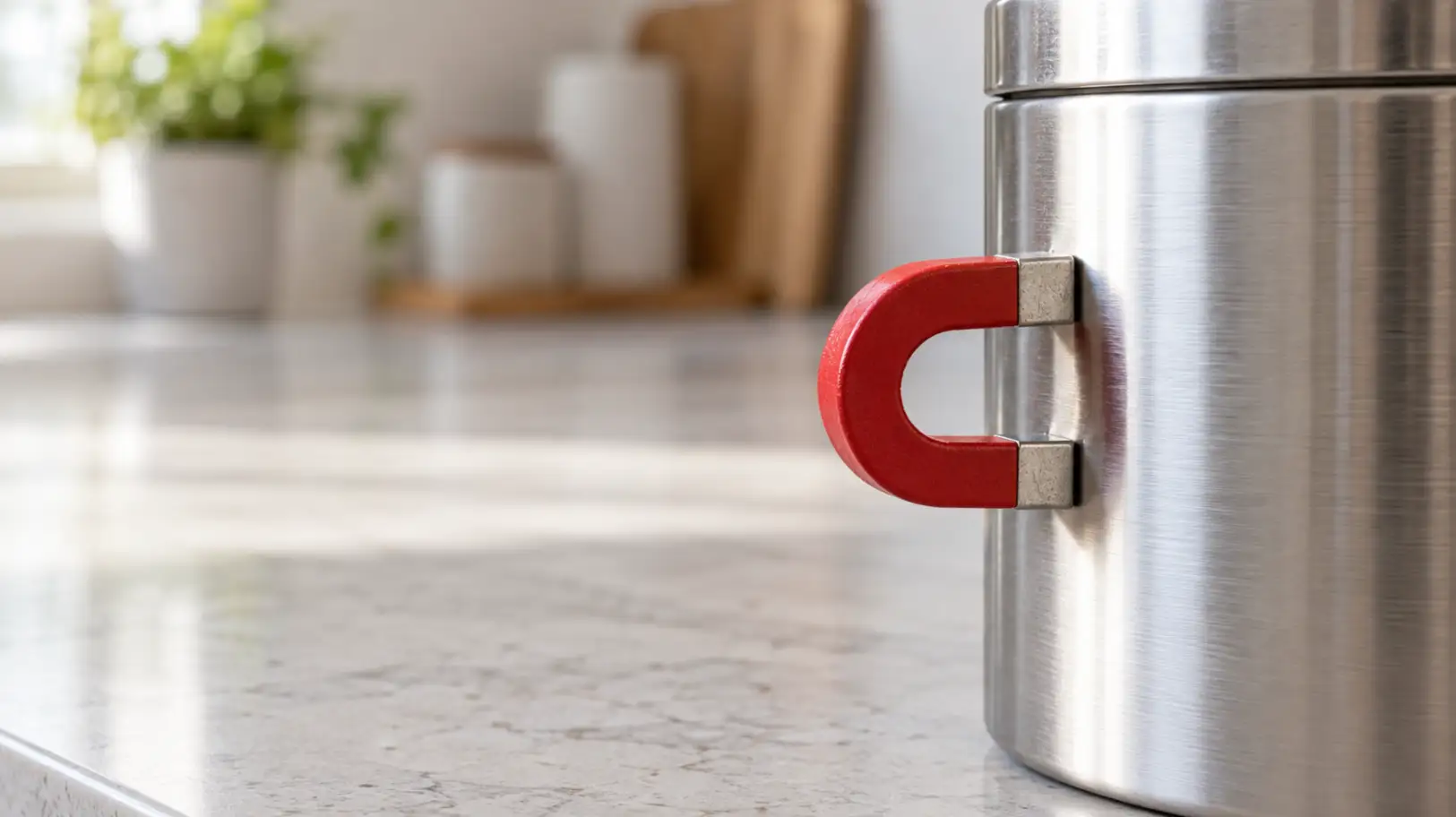
No. Stainless steel includes several families with different magnetic properties. Ferritic, martensitic and duplex stainless steels can be strongly attracted to a magnet.
The British Stainless Steel Association explains that magnetic response depends on the steel's internal structure. The Australian Stainless Steel Development Association confirms that common austenitic grades, such as 304 and 316, usually show little attraction in their annealed condition, while other families are strongly magnetic.
Manufacturing also matters. Cold working can change the structure of some austenitic steels and increase their attraction to a magnet. A magnetic response therefore does not, by itself, mean that an item is not stainless steel.
Key takeaway
Stainless steel can be magnetic. Its grade and processing history affect how it responds to a magnet.