Explanation
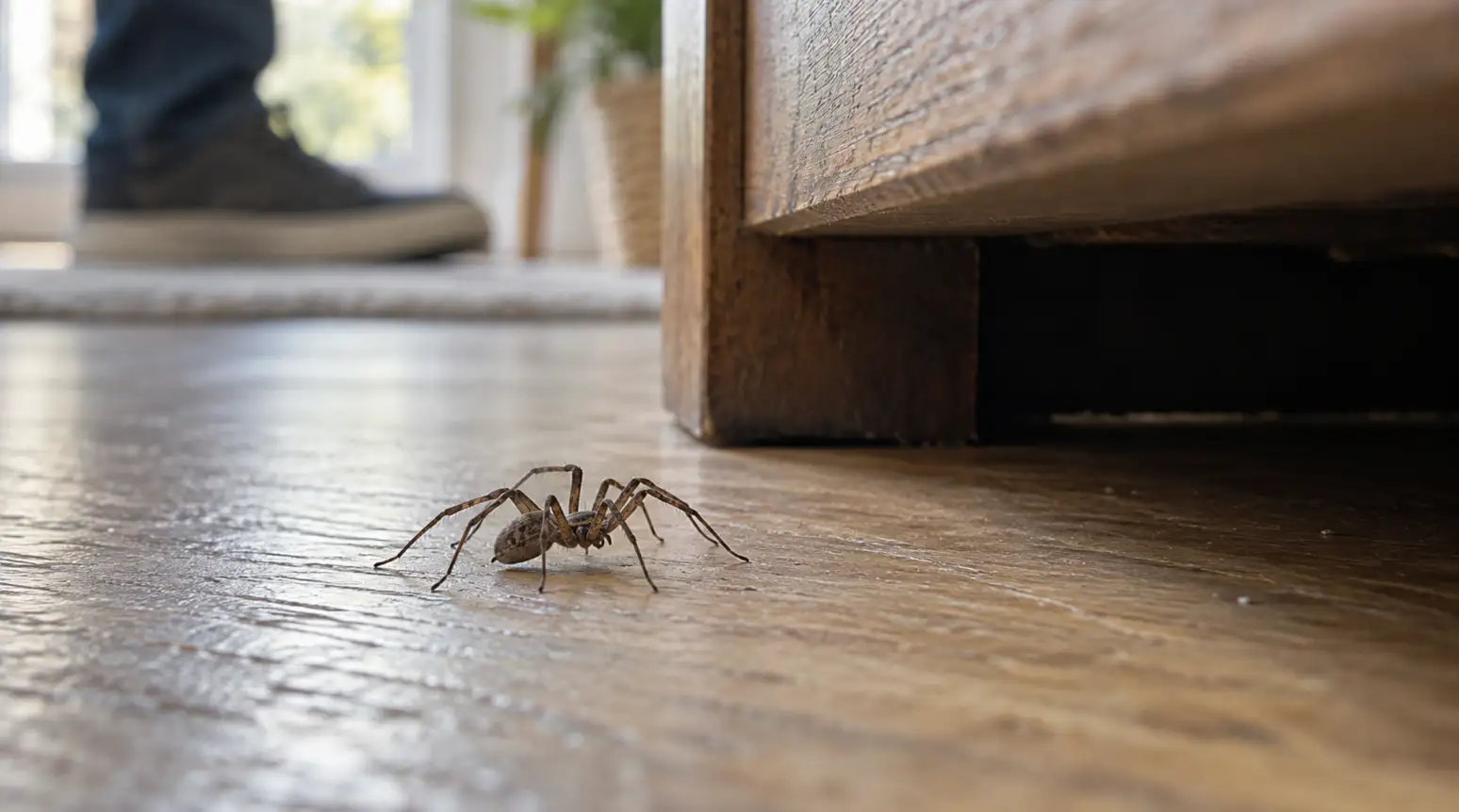
No. The claim misrepresents normal spider behavior. Spiders generally ignore people or flee when disturbed; approaching a person does not establish that they are seeking that person's protection.
Spidentify, an educational resource developed by Minibeast Wildlife, explains that most spiders run away when threatened. It describes even the defensive Sydney funnel-web as seeking shelter when given the opportunity. Separately, University of Washington arachnid curator Rod Crawford explains that spiders can experience a person's body as part of their surroundings rather than recognize a human individual.
These sources contradict the proposed protective relationship, but they cannot explain every encounter across all spider species. A spider's direction of movement alone is insufficient to identify its motivation. Seeking shelter and deliberately seeking a human protector are different claims.
Key takeaway
A spider moving toward you is not evidence that it sees you as a protector.