Explanation
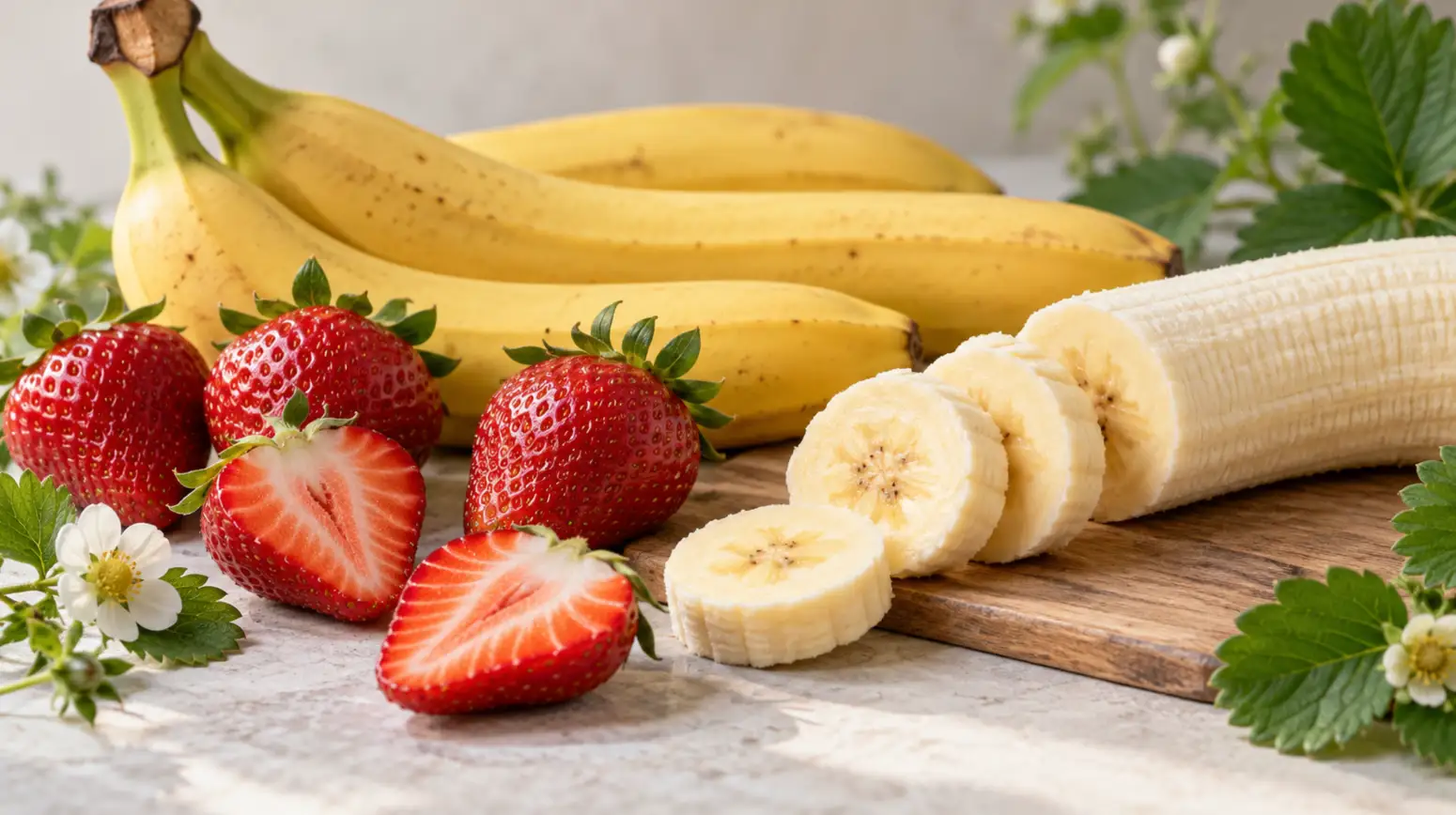
Yes, in botanical terminology. Bananas are classified as berries, while strawberries are aggregate accessory fruits. The claim concerns how plants form their fruits, not how people group foods in everyday conversation.
The New York Botanical Garden explicitly identifies bananas as berries and strawberries as non-berries in its exhibition material. A botanical berry develops from a single flower's ovary. North Carolina State Extension describes the strawberry's fleshy portion as accessory tissue holding individual fruits called achenes, which develop from the flower's ovaries.
The small seed-like structures on a strawberry's surface are therefore individual fruits, rather than simply exposed seeds on a conventional berry. Calling strawberries berries in cooking remains normal usage; botanical classification applies a different definition.
Key takeaway
Bananas are botanical berries; strawberries are aggregate accessory fruits.