Explanation
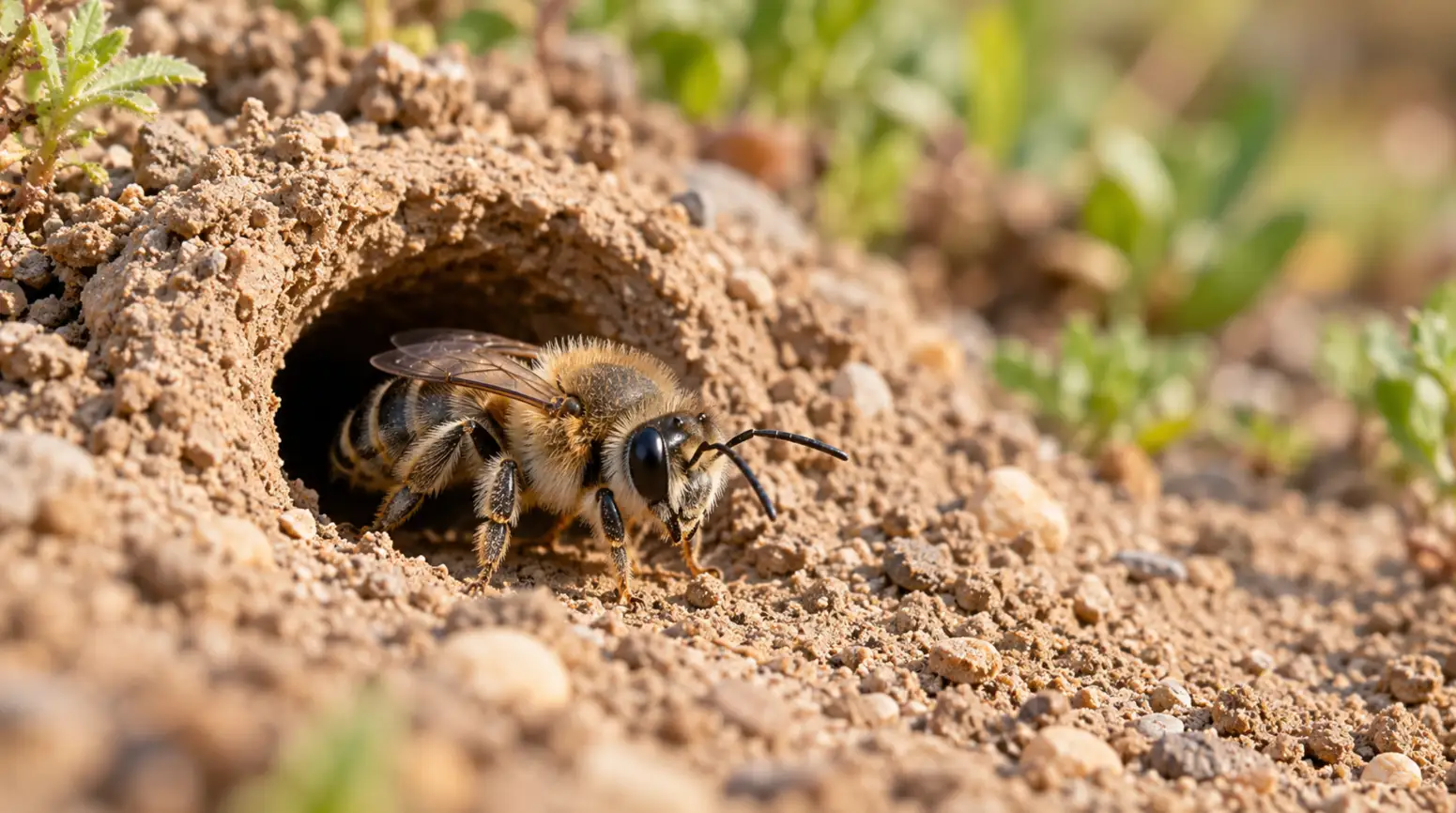
No. Many bee species are solitary rather than living in colonies organized around queens and workers. Females of these species prepare nests and provide food for their own offspring.
The USGS identifies solitary bees such as Perdita minima and describes the diversity of native bee nesting habits. The Xerces Society explains how solitary females construct brood cells in soil, stems or other cavities, placing an egg and provisions in each cell.
Solitary does not necessarily mean widely separated. Several females may nest close together, and some species share an entrance while maintaining separate brood cells. An aggregation of nests is therefore not automatically a colony with a queen and workers.
Key takeaway
The queen-and-workers model does not describe every bee. Solitary nesting and social colonies are different ways of life.