Gravity remains strong at the station's altitude
NASA
NASA states that gravity at ISS altitude is about 90% of its surface strength and explains floating as shared free fall.
Based on: NASA

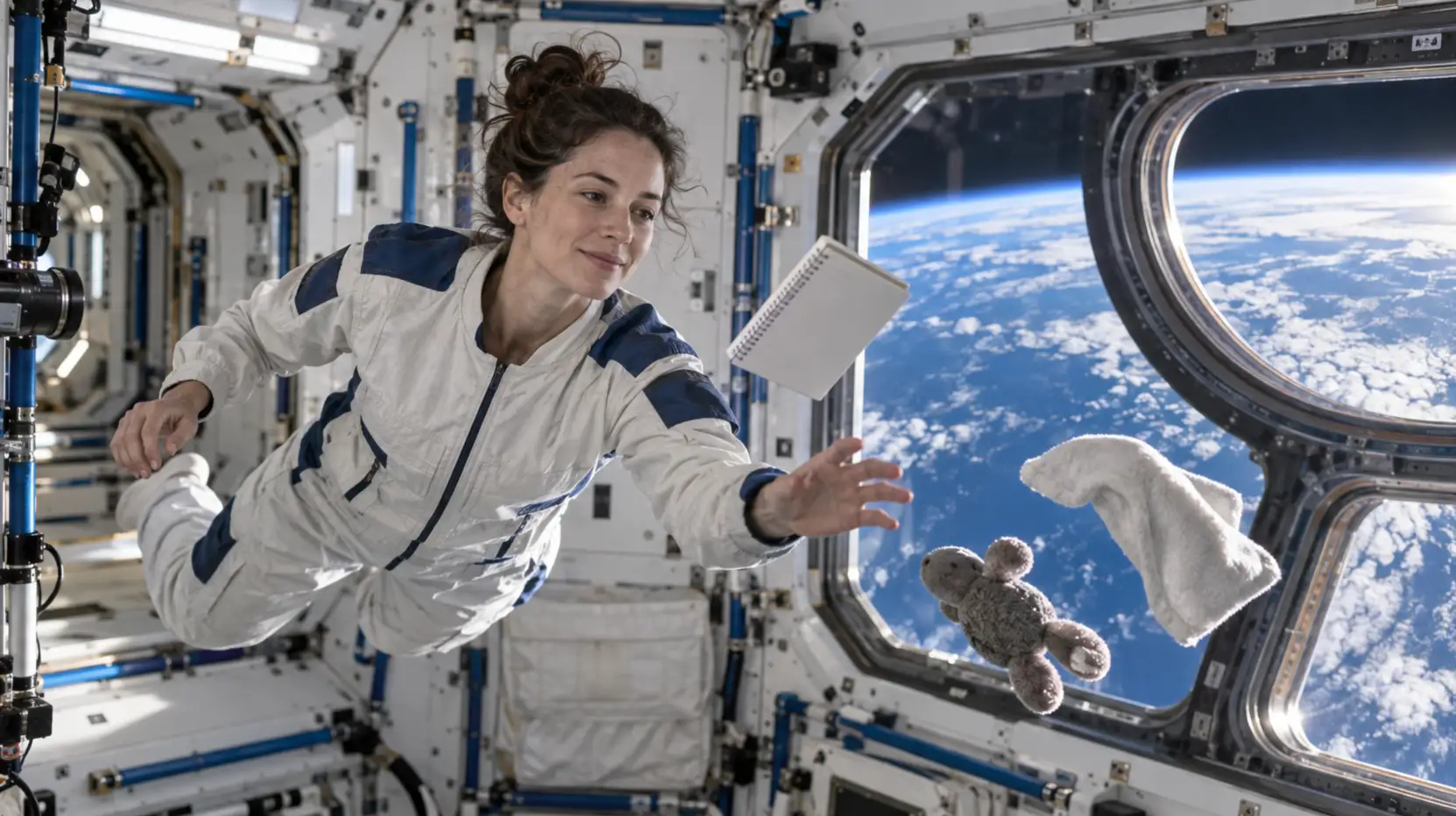
No. Astronauts aboard the International Space Station do not float because gravity has disappeared. They and the station are in continuous free fall around Earth.
NASA explains that gravity at the station's altitude is roughly 90% as strong as at Earth's surface. OpenStax independently describes how orbital motion allows astronauts to keep falling while Earth's surface curves away beneath them.
The useful distinction is between feeling weightless and experiencing no gravitational pull. The station, its crew and loose objects fall together, so objects appear to float relative to the cabin.
Floating in orbit is a result of shared free fall, not the absence of gravity.
NASA
NASA states that gravity at ISS altitude is about 90% of its surface strength and explains floating as shared free fall.
Based on: NASA
OpenStax
The textbook explains that orbiting astronauts are in free fall and that gravity supplies the acceleration needed for orbital motion.
Based on: OpenStax
Was this check helpful?
Sign in required
Sign in required

Yes. Researchers observed cell division at 63°C. Recovery after brief exposure to 70°C is a separate result and does not demonstrate reproduction at that temperature.

No. Bats have functional eyes and can see. Their visual abilities vary between species, so limited detail vision should not be confused with blindness.

Yes. Researchers say the insect had been misidentified for decades. Recognising it as a new species does not mean it had never been observed before.