Trooday
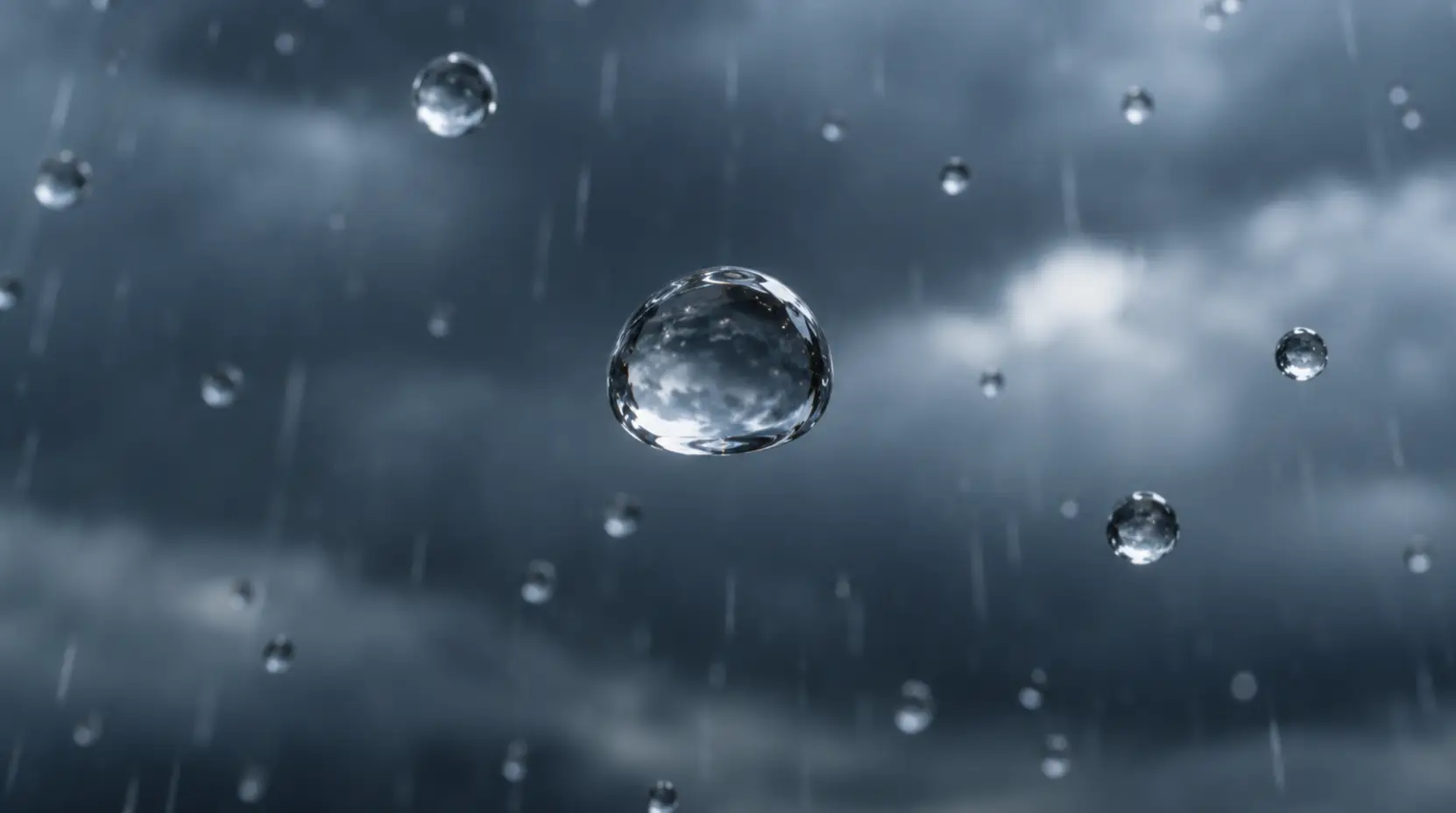
Conceptual illustration of rounded and flattened raindrops falling through the air.
Science & Space

Are falling raindrops shaped like teardrops?

Published

Verdict
False
Verification confidenceHigh

Explanation

No. Falling raindrops do not normally have the pointed teardrop shape used in drawings. Small drops are approximately spherical, while larger ones become flatter.

NASA explains that air resistance changes a drop's shape as it grows and falls. USGS describes the competing effects of surface tension, which favours a rounded shape, and air pressure, which deforms larger drops.

There is no single shape for every raindrop. Size matters, and sufficiently distorted drops can break apart. The familiar pointed symbol should not be mistaken for the shape of rain falling freely through the air.

Key takeaway

Small raindrops are rounded; larger ones flatten. A pointed teardrop is a visual symbol, not an accurate model of falling rain.

Evidence

NASA describes rounded drops that flatten

NASA Global Precipitation Measurement

Contradicts the claim

NASA explains that raindrops begin as rounded droplets and flatten under air resistance as they grow and fall, rather than taking on a pointed teardrop shape.

Based on: NASA Global Precipitation Measurement

Surface tension and air pressure determine shape

U.S. Geological Survey

Contradicts the claim

USGS describes small drops as spherical and larger drops as flattened, explaining the balance between surface tension and pressure from the surrounding air.

Based on: U.S. Geological Survey

Was this check helpful?

Sign in required

Sign in required

How we check claims

Related checks

A bat resting in a natural roost with its eyes visible.
Science & Space

Are bats blind?

No. Bats have functional eyes and can see. Their visual abilities vary between species, so limited detail vision should not be confused with blindness.

Verdict
False
Verification confidenceHigh