Explanation
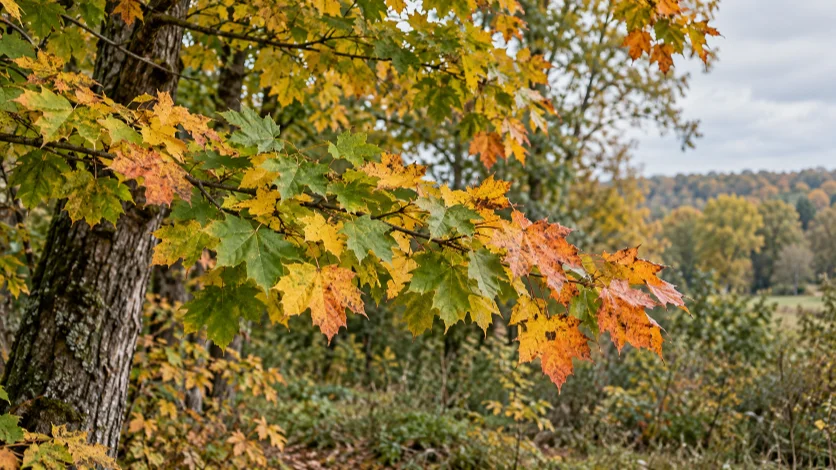
No. Cold weather alone does not explain autumn leaf colours. Shorter days help signal seasonal changes in deciduous trees, including a reduction in the green pigment chlorophyll.
The National Park Service explains that as days shorten and chlorophyll breaks down, other chemicals become the main source of leaf colour. NASA-produced educational material published by NOAA likewise identifies shorter daylight as a signal for leaves to stop making chlorophyll.
Weather still matters. It can affect the timing and duration of the display, and drought or an early frost can cause leaves to fall before they develop autumn colours. The useful distinction is between seasonal light cues, changes in pigments and weather that modifies the outcome.
Key takeaway
Autumn colour is not simply a response to cold. Shorter days and changing pigments are central, while weather influences the display.