Reflected sunlight makes the Moon visible in daylight
NASA
NASA scientist Sarah Noble explains that reflected sunlight can make the Moon visible during the day when it is in the right part of the sky.
Based on: NASA

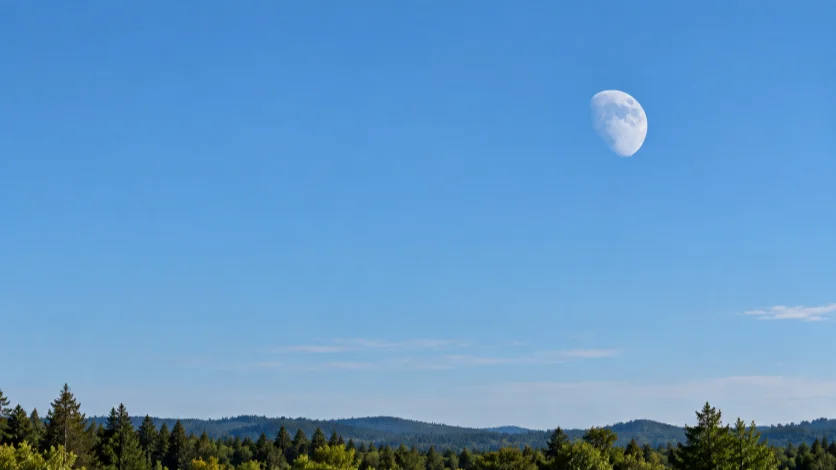
Yes. Seeing the Moon during daylight is normal. Its surface reflects sunlight, which can remain visible against the bright daytime sky.
NASA explains that the Moon spends almost as much time in the daytime sky as the nighttime sky. An astronomer interviewed by Washington State University independently explains how its orbit and the observer's position determine visibility.
This does not mean the Moon is visible all day, every day. Its phase, position above the horizon and sky conditions matter. A daytime Moon is an ordinary consequence of the Sun–Earth–Moon geometry.
The Moon is not exclusively a nighttime object. Daylight does not automatically hide it.
NASA
NASA scientist Sarah Noble explains that reflected sunlight can make the Moon visible during the day when it is in the right part of the sky.
Based on: NASA
Washington State University
Astronomer Michael Allen explains that the Moon's position and reflected light permit visibility during both daytime and nighttime.
Based on: Washington State University
Washington State University
The explanation connects observing times to lunar phases and explicitly notes that the viewing examples assume clear skies.
Based on: Washington State University
Was this check helpful?
Sign in required
Sign in required

Yes. Sound travels roughly four times faster in water than in air under typical conditions. The exact speed depends on the medium and its conditions.

Yes. A full circular rainbow can be visible from an elevated viewpoint when sunlight and water droplets align. From the ground, we usually see only part of the circle.

No. The second is still defined using caesium-133. The new lutetium clock is a research advance that could contribute to a future redefinition.