Explanation
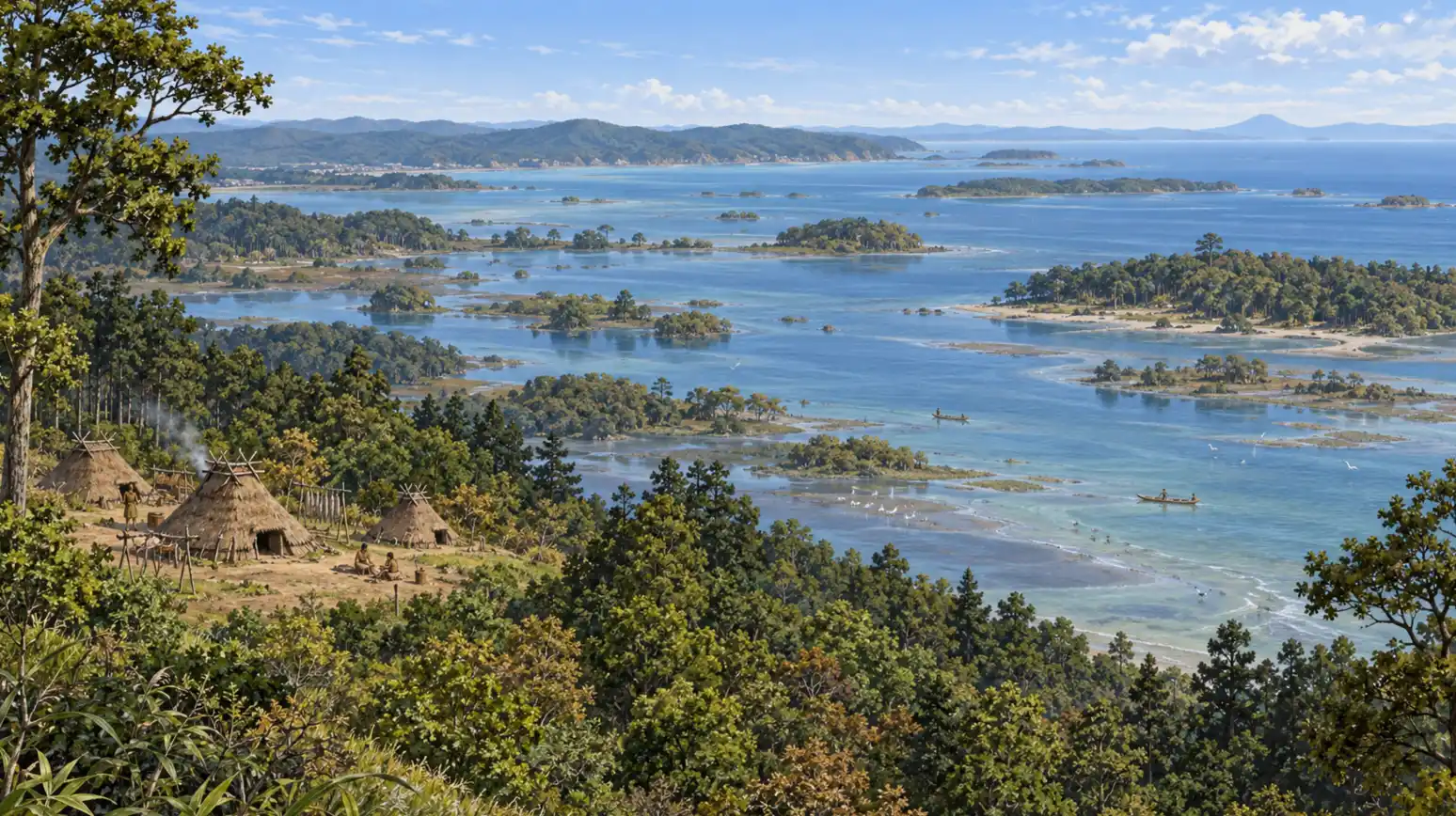
Parts of the land occupied by present-day Tokyo were once underwater, but the statement needs a geographical qualification. During the prehistoric Jomon marine transgression, seawater spread into low-lying areas; this does not mean that the entire Tokyo region was submerged.
Nishitokyo City's archaeological account explains that the Tokyo lowland became seabed around 6,000 years ago, while the Musashino Plateau supported forests. Independent geological research documents marine mollusks in southern Kanto bay deposits dating to the transgression, including its maximum stage roughly 6,500 to 5,000 years before present.
The evidence concerns a changing prehistoric coastline, not an existing city sinking beneath the sea. Higher ground and submerged lowlands coexisted, and the geological record also documents later filling of bays by river sediment. The accurate version is that parts of present-day Tokyo were once covered by the sea.
Key takeaway
Parts of present-day Tokyo were prehistoric seabed, but the whole region was not underwater.