Venous blood remains red as oxygen levels fall
Cleveland Clinic
Hematologist Alan Lichtin explains that normal circulating blood ranges from bright red to dark red; the blood in blue-looking veins is not blue.
Based on: Cleveland Clinic

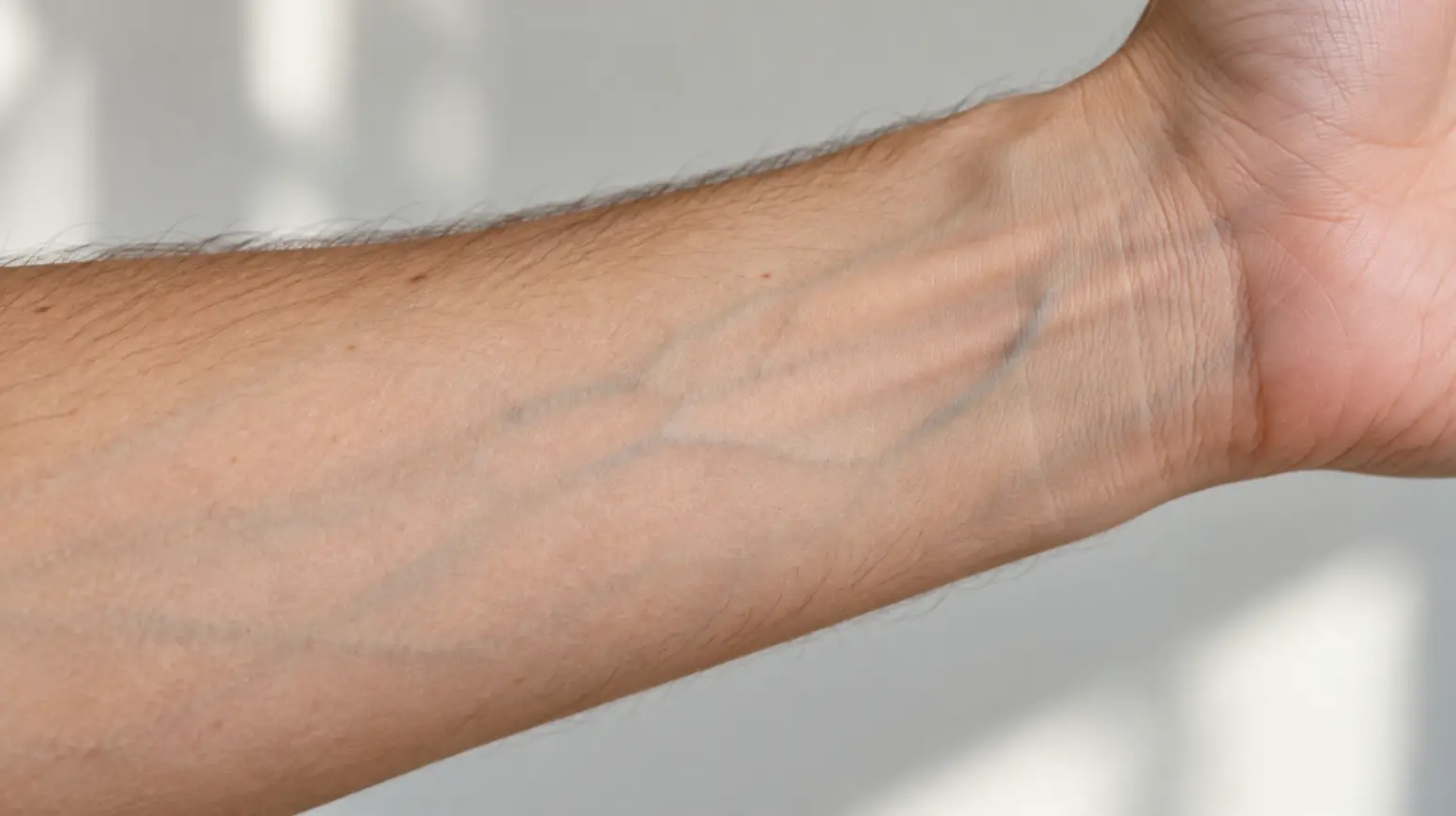
No. In normal human circulation, blood in the veins is dark red, not blue. Losing oxygen changes its shade rather than turning it blue.
Cleveland Clinic explains that oxygen-rich blood is bright red and becomes darker as tissues take up oxygen. An independent explanation from West Texas A&M University also identifies venous blood as dark red.
The blue appearance of some veins is an optical effect involving light and the tissues covering them. A vein's appearance through the skin does not reveal the actual colour of the blood inside.
Blue-looking veins contain red blood. Oxygen levels change its shade of red.
Cleveland Clinic
Hematologist Alan Lichtin explains that normal circulating blood ranges from bright red to dark red; the blood in blue-looking veins is not blue.
Based on: Cleveland Clinic
West Texas A&M University
Physicist Christopher S. Baird describes venous blood as dark red and explains that its blue appearance involves viewing it through overlying tissues.
Based on: West Texas A&M University
Was this check helpful?
Sign in required
Sign in required

No. Lactose intolerance involves difficulty digesting milk sugar. Milk allergy involves an immune response to milk proteins.

False. Caffeine can have effects, but research does not show that it reliably improves core ADHD symptoms.

Evidence does not show that regulated sunscreen causes skin cancer. UV radiation is the established risk, and regular sunscreen use can reduce it.