Trooday
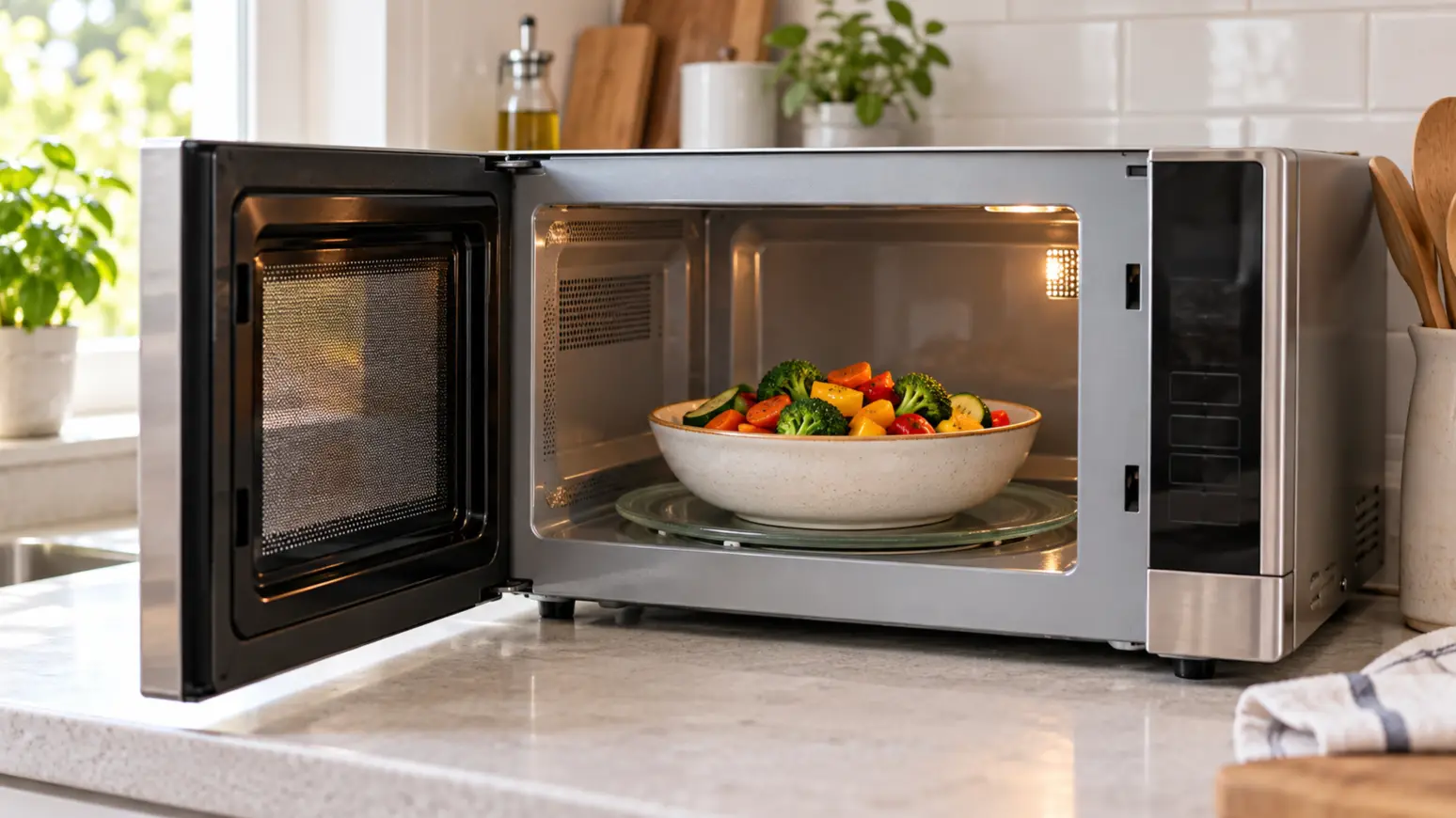
An open household microwave oven with a ceramic bowl of vegetables inside.
Lifestyle

Does cooking food in a microwave oven make it radioactive?

Published

Verdict
False
Verification confidenceHigh

Explanation

No. Cooking or reheating food in a household microwave oven does not make it radioactive. Absorbed microwave energy becomes heat.

The FDA explains that microwaves are non-ionising radiation and heat food through their interaction with water molecules. Health Canada independently confirms that they do not make food radioactive and do not remain in it after the oven is switched off.

This does not mean microwave cooking has no hazards. The FDA describes risks such as burns and uneven heating. Those are separate issues from radioactivity: food remaining hot after cooking does not mean it contains trapped microwaves.

Key takeaway

Microwave cooking leaves food hot, not radioactive. Heat and radioactivity are different things.

Evidence

Absorbed microwave energy becomes heat

U.S. Food and Drug Administration

Contradicts the claim

The FDA identifies microwaves as non-ionising radiation and states that their energy is converted to heat without making food radioactive.

Based on: U.S. Food and Drug Administration

Microwaves do not remain in food after cooking

Health Canada

Contradicts the claim

Health Canada states that microwave ovens do not make food radioactive and that microwaves disappear when the oven is switched off.

Based on: Health Canada

Cooking hazards are separate from radioactivity

U.S. Food and Drug Administration

Provides context

The FDA discusses burns and uneven heating as microwave-related hazards. Rejecting the radioactivity claim does not remove these ordinary cooking risks.

Based on: U.S. Food and Drug Administration

Was this check helpful?

Sign in required

Sign in required

How we check claims

Related checks