Memory chips replace mechanical storage components
Kingston Technology
Kingston defines an SSD as using NAND flash or DRAM chips instead of the platters and mechanical mechanisms found in HDDs.
Based on: Kingston Technology

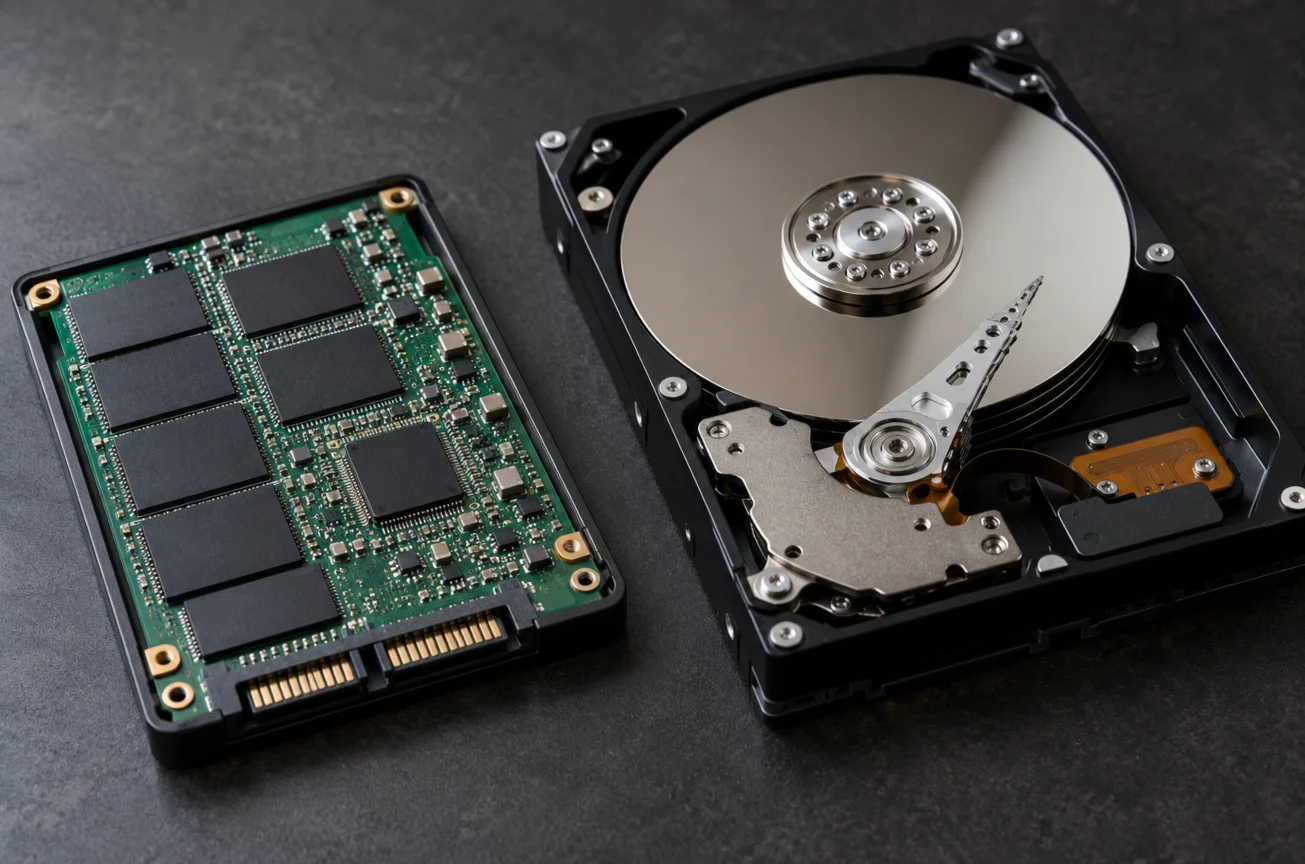
No. Solid-state drives store data in memory chips, not on spinning disks. Mechanical hard disk drives, or HDDs, use rotating magnetic platters and moving read/write heads.
Kingston describes SSDs as replacing those mechanical components with memory chips. Dell independently explains that flash-based SSDs have no moving storage parts and can come in several physical formats, including 2.5-inch units.
An SSD can therefore have a familiar drive-shaped enclosure without containing a spinning disk. However, solid-state storage is not immune to wear: NAND flash has endurance limits, so the absence of a motor does not imply an unlimited lifespan.
SSD and HDD describe different storage mechanisms. A similar outer case does not mean the same technology is inside.
Kingston Technology
Kingston defines an SSD as using NAND flash or DRAM chips instead of the platters and mechanical mechanisms found in HDDs.
Based on: Kingston Technology
Dell Technologies
Dell explains that HDDs use mechanical platters and moving heads, while SSDs use flash memory without moving storage components.
Based on: Dell Technologies
Kingston Technology
Kingston explains that NAND flash cells eventually wear out and that wear-levelling spreads writes across cells to extend their useful life.
Based on: Kingston Technology
Was this check helpful?
Sign in required
Sign in required

No. Bluetooth can transmit audio directly between compatible devices without internet. Accessing the audio content is a separate requirement.

No. 5 GHz names a Wi-Fi frequency band; 5G names a generation of cellular technology. A home connection can use both, but they describe different links.

No. A ceiling fan circulates air and can make occupants feel cooler, but it does not lower the room's air temperature on its own.