Trooday
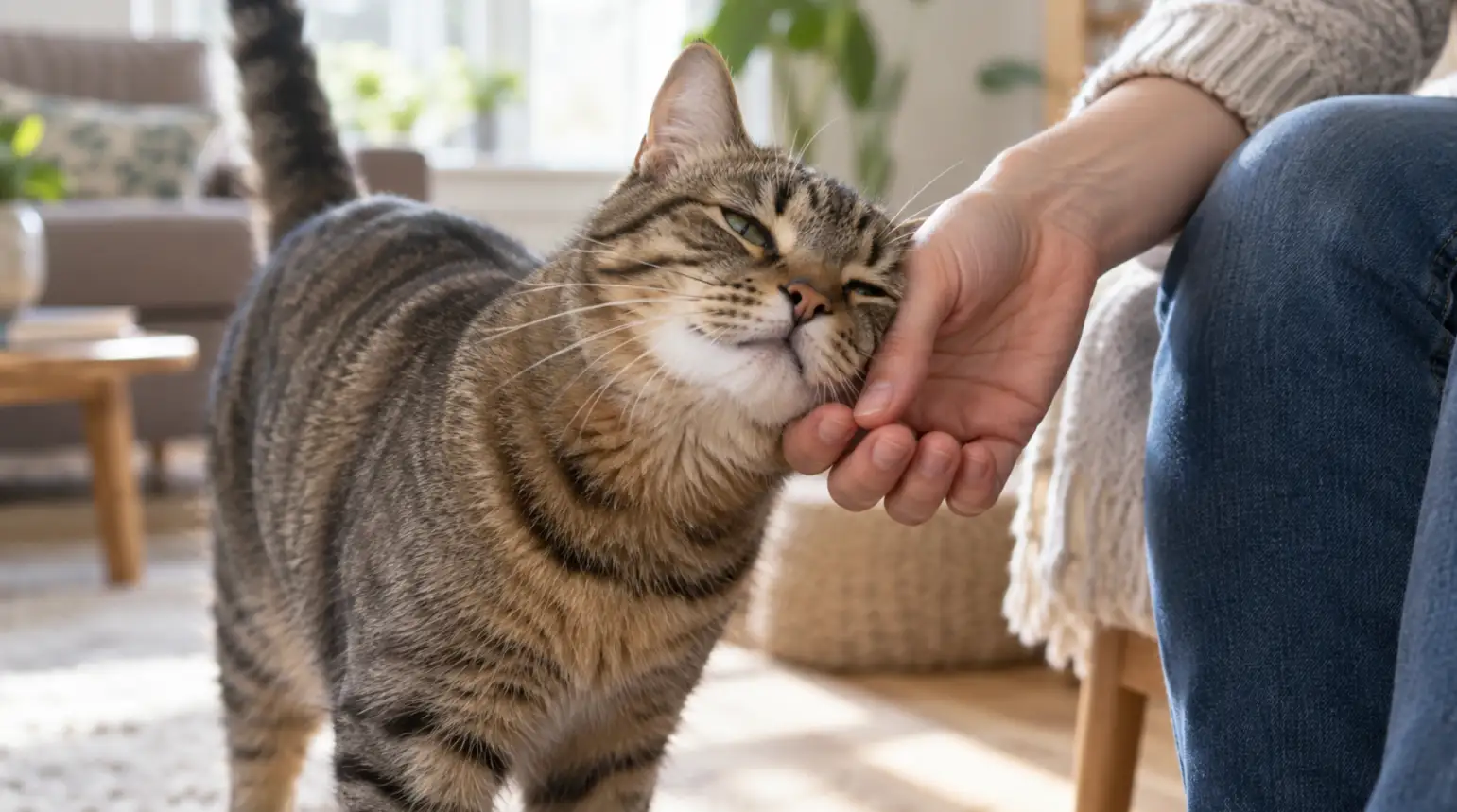
A domestic cat rubbing its head against a person's hand.
Science & Space

Is it true that cats see humans as cats?

Published

Verdict
Unverified
Verification confidenceMedium

Explanation

It has not been established that cats think humans are other cats. Using similar social behaviors with humans and fellow cats does not, by itself, reveal how cats categorize our species.

In a 2014 interview, behavior researcher John Bradshaw described cats rubbing against people, raising their tails and grooming them using behaviors also directed toward other cats. He emphasized behavioral similarities and acknowledged that more research was needed to understand what cats think about us.

Independent experiments show that cats respond to human slow blinking and can mentally track an unseen owner's location from their voice. These findings demonstrate aspects of cat-human communication and social cognition, but neither study tested whether cats classify humans as cats. The literal claim therefore remains unverified rather than proven true or false.

Key takeaway

Treating people with feline social signals is not proof that cats mistake humans for cats.

Evidence

Shared social behaviors do not establish species categorization

John Bradshaw, interviewed by National Geographic

Provides context

Bradshaw described similarities between cats' behavior toward humans and other cats, while acknowledging uncertainty about what cats think of people. This is an expert interpretation of behavior.

Based on: National Geographic

Cats respond to human slow blinking

Humphrey and colleagues

Provides context

Experiments found that cats responded to human slow blinks with eye narrowing and were more likely to approach an experimenter after slow blinking. The study examined communication, not whether humans are perceived as cats.

Based on: Scientific Reports

Cats mentally track an unseen owner

Takagi and colleagues

Provides context

Playback experiments suggested that cats represent their unseen owner's location using the owner's voice. This supports social cognition about familiar people without establishing how cats categorize human species identity.

Based on: PLOS ONE

Was this check helpful?

Sign in required

Sign in required

How we check claims

Related checks