Live accompaniment was common
George Eastman Museum
The museum explains that silent films were rarely exhibited silently and were commonly accompanied by piano, organ or other musicians.
Based on: George Eastman Museum

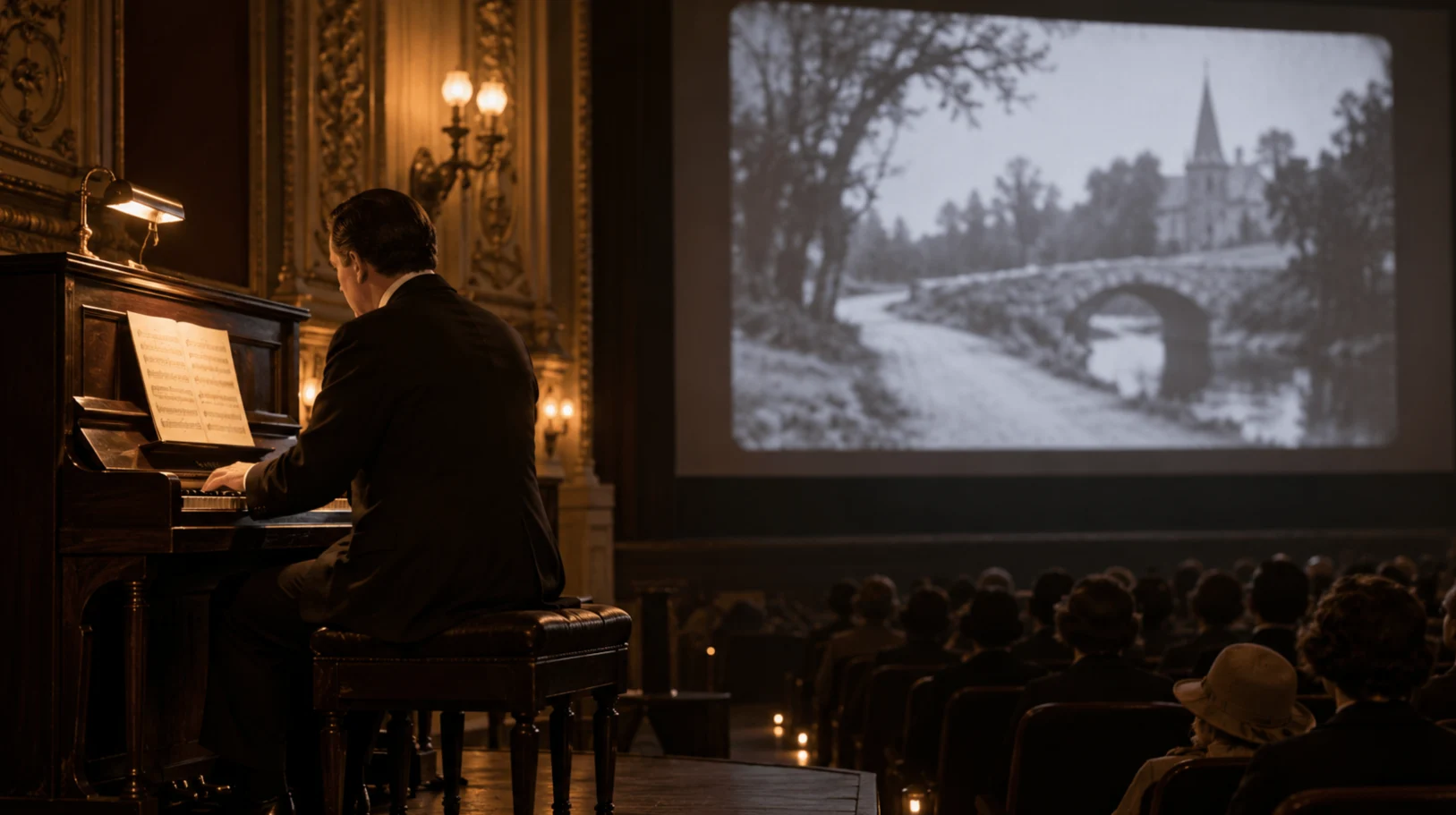
No. Silent films were commonly accompanied by music during cinema screenings. Calling a film silent does not mean its audience usually heard no music.
The George Eastman Museum describes pianists, organists and sometimes orchestras accompanying screenings. The Museum of the Moving Image explains that recorded accompaniment later offered theatre owners a way to reduce musicians' costs.
The distinction is between sound supplied with the film and sound supplied at the screening. Musical arrangements varied, so this does not mean every silent film had a dedicated score or every showing used the same accompaniment.
Silent cinema often combined projected images with live music. A film without recorded dialogue could still be a musical experience.
George Eastman Museum
The museum explains that silent films were rarely exhibited silently and were commonly accompanied by piano, organ or other musicians.
Based on: George Eastman Museum
Museum of the Moving Image
The museum's historical essay describes recorded musical accompaniment as a way for theatre owners to save on musicians' salaries, confirming the role of live musicians before that transition.
Based on: Museum of the Moving Image
George Eastman Museum
Some films had complete scores, while others used cue sheets suggesting music and moods. The accompaniment could therefore depend on the presentation.
Based on: George Eastman Museum
Was this check helpful?
Sign in required
Sign in required

No. Modern Oscar statuettes are cast in bronze and plated with 24-karat gold. The gold is a surface coating, not the material throughout.
No. The original series ran for three seasons, from 1966 to 1969. The five-year mission describes the fictional voyage, not the show's television run.
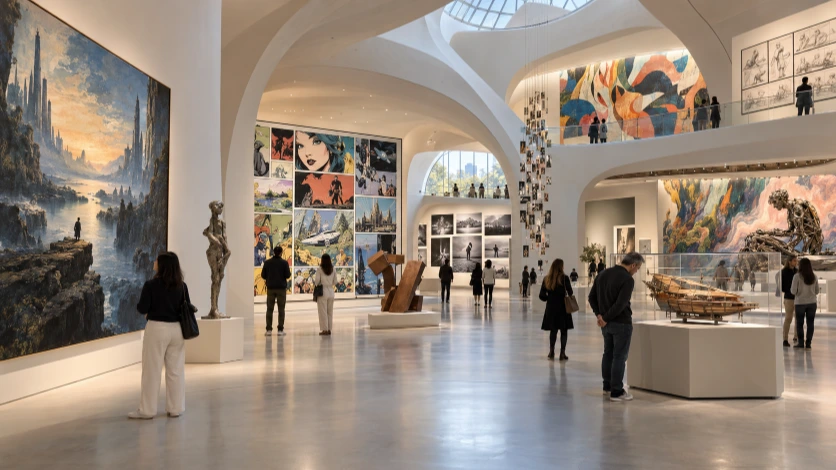
No. Star Wars is part of the museum, but its wider focus is visual storytelling across art, comics, cinema and cultures.